
Education
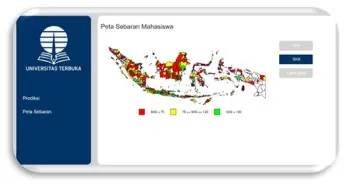
Prediction of Retention and Mapping of Universitas Terbuka Student Distribution
Predictive analytics and geospatial mapping to understand student retention factors and support educational service strategies.

Developing models that explain patterns, estimate risks, and support prioritizing organizational actions.
Forecasting, classification, segmentation, survival analysis, risk scoring, geospatial analytics, and model-driven dashboards.
Application of statistical and machine learning algorithms to uncover hidden patterns and predict future events based on historical data.
Organizations that already have good historical data and want to move from simply looking at the past (descriptive) to predicting the future (predictive).
Reducing business risk, optimizing resource allocation, and increasing program targeting accuracy through predictive insights.
Predictive models, risk scores, automated segmentation, and integration of model outputs into daily decision-making processes.
Organizations need to estimate future risks or events.
Target priorities cannot yet be determined objectively.
Regional, group, or behavioral patterns are not visible from regular reporting.
Existing models have not been validated or are not yet usable.
Understanding the organizational context, the problem at hand, and the desired outcomes.
Evaluating available data — its quality, structure, completeness, and readiness.
Building reliable, clean, and analysis-ready data pipelines.
Transforming data into relevant insights and usable models.
Building systems, dashboards, or AI solutions and deploying them to production.
Documenting the process and transferring knowledge to internal teams.
Predictive analytics and geospatial mapping to understand student retention factors and support educational service strategies.
No. Models are chosen based on data structure, interpretation needs, sample size, decision risk, and implementation requirements.
Evaluation covers relevant validation, bias checks, stability, interpretability, and the model's fit with the usage context.
Yes. Models can be delivered through dashboards, scoring interfaces, priority reports, or application integration so results are easy to use.
Consult your needs with our expert team to map out the most appropriate approach for your organization.