
Education
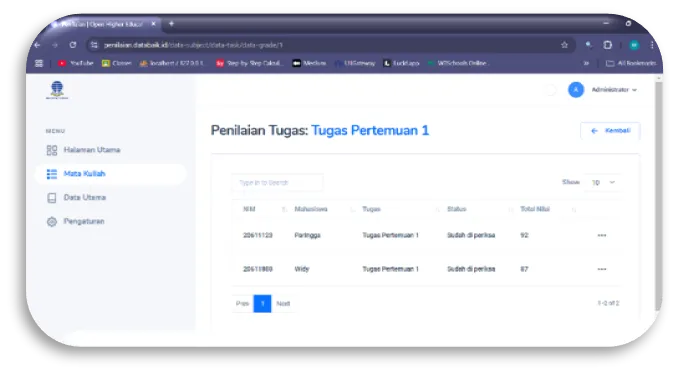
Automated Essay Scoring Dashboard for Educational Institutions
Development of an automated essay scoring system combining text processing, scoring, and a results dashboard to support distance learning.

Building an integrated, clean, well-documented data foundation that is ready for analytics and AI.
Data collection, integration, cleaning, transformation, ETL/ELT, database integration, data quality, and provisioning of analytics-ready datasets.
Design, build, and management services for reliable data flow architectures to integrate diverse raw data sources.
Organizations with large data volumes or disparate systems struggling to achieve a single source of truth.
Automating data processing, ensuring high data quality, and reducing data preparation time for data scientists and analysts.
Automated data pipelines (ETL/ELT), centralized data warehouses or lakes, and clean datasets ready for reporting or machine learning.
Data is scattered across many files, applications, and work units.
Variable definitions are inconsistent and merging processes are still manual.
Data quality is unmeasured, making analyses hard to trust.
Analytics teams spend too much time cleaning data.
Understanding the organizational context, the problem at hand, and the desired outcomes.
Evaluating available data — its quality, structure, completeness, and readiness.
Building reliable, clean, and analysis-ready data pipelines.
Transforming data into relevant insights and usable models.
Building systems, dashboards, or AI solutions and deploying them to production.
Documenting the process and transferring knowledge to internal teams.
Development of an automated essay scoring system combining text processing, scoring, and a results dashboard to support distance learning.
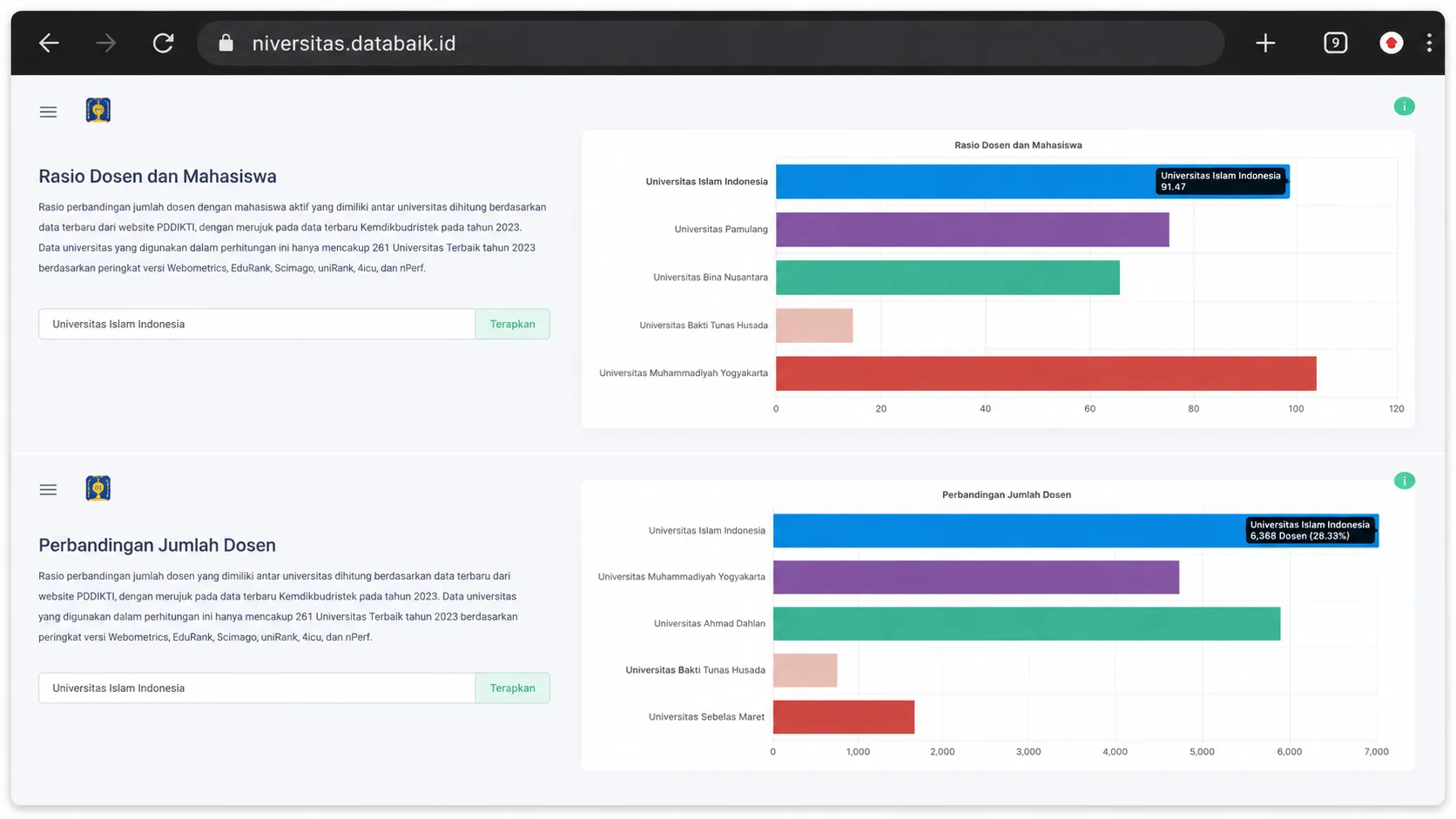
An interactive dashboard to map a university's strategic position based on higher education performance indicators.
Not necessarily. The first approach is to assess available systems and design the most proportionate integration before recommending new development.
Yes, as long as source access and structure can be mapped. The integration mechanism is adjusted to the update frequency and operational needs.
It can include data definitions, ownership, quality, metadata, update flows, and access control according to the project scope.
Consult your needs with our expert team to map out the most appropriate approach for your organization.